 Choosing the right laboratory for your implant restorations determines how confident you are at the chair and how your patients respond to their results. J & F Dental Labs delivers precision implant restorations backed by German-trained technicians and exclusive use of OEM manufacturer parts.
When esthetics matter as much as function, the laboratory behind the case needs to demonstrate mastery of materials, digital workflows, and complex case management.
This guide compares four implant restoration laboratories on the criteria cosmetic dentists and prosthodontists care about most: craftsmanship, esthetic outcomes, digital compatibility, and support for complex cases.
Quick guide: 4 best implant restoration labs for cosmetic dentists
- J & F Dental Labs: The best esthetic implant restoration laboratory for cosmetic dentists and prosthodontists requiring custom CAD/CAM abutments, OEM parts, and full case management
- Glidewell: A high-volume laboratory with milled zirconia and implant crown options for general restorative cases
- National Dentex: A network of regional laboratories offering implant restoration services across multiple U.S. locations
- Modern Dental Group: A global laboratory group with CAD/CAM production for single-unit and multi-unit implant restorations
How we chose the best implant restoration laboratories for esthetic cases
Your implant cases deserve a laboratory partner that treats each restoration as a one-of-a-kind clinical challenge. We evaluated these laboratories based on what directly affects your outcomes and your patients' confidence in their new teeth.
- Esthetic craftsmanship: How closely do finished restorations match natural tooth shade, translucency, and gingival contours? You want restorations that disappear into the smile line.
- OEM component use: Does the laboratory use parts made by your implant manufacturer? Using OEM components protects your patients' warranties and reduces the risk of component mismatch.
- Digital workflow compatibility: Can you send digital impression files from your preferred intraoral scanner without conversion headaches?
- Complex case expertise: How well does the laboratory handle full-arch restorations, multi-platform cases, and guided surgery planning?
- Custom abutment design: Does the laboratory design patient-specific abutments using CAD/CAM software, or does it rely on stock components?
- Case management and communication: Will the laboratory keep you informed at every step, from impression post delivery to final restoration?
The 4 best implant restoration laboratories for esthetic dentistry
1. J & F Dental Labs: Best overall implant restoration laboratory for cosmetic dentists and prosthodontists
 J & F Dental Labs brings more than 30 years of implant restoration experience and over 200,000 completed cases to your practice. The laboratory's ImplantAssist℠ program manages your case from the first impression post to the final restoration.
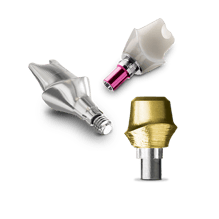
What sets J & F Dental Labs apart is its exclusive use of OEM manufacturer parts on every case. By pairing implant manufacturer abutments with custom CAD/CAM design, J & F Dental Labs helps extend implant life from 5 years to 20 or more. German-trained master dental technicians (MDTs) craft each restoration with attention to shade, translucency, and anatomical form that matches the patient's natural dentition.
J & F Dental Labs accepts digital impression files from all major intraoral scanners, including 3Shape Trios, iTero, Medit, CEREC, and Carestream. The laboratory also accepts open .STL files, so your digital workflow stays uninterrupted regardless of scanner brand.
J & F Dental Labs benefits
- ImplantAssist℠ program: J & F Dental Labs ships the correct OEM impression post or scan body to your office at no cost before the impression appointment, eliminating guesswork and delays.
- Custom CAD/CAM abutments: Each abutment is designed with the final restoration in mind, giving you proper support geometry for natural esthetics and long-term function.
- German-trained technicians: Recruited internationally for their craftsmanship, J & F Dental Labs' MDTs bring European precision training to every case.
- Full-arch specialization: With tens of thousands of full-arch cases restored, the laboratory has documented expertise in the most demanding restorative scenarios.
- Free case pickup: J & F Dental Labs offers complimentary case pickup for practices up to 50 miles away and priority shipping for those up to 200 miles from the Pittsburgh laboratory.
- Guided surgery support: The laboratory's implant technicians are proficient across all major guided surgery platforms, helping you take CB/CT scans to successful chairside placement.
J & F Dental Labs pros and cons
Pros:
- Exclusive use of OEM parts from every implant manufacturer protects patient warranties and supports long-term implant longevity
- Complimentary impression posts and scan bodies shipped ahead of the patient appointment reduce administrative steps for your team
- German-trained MDTs apply a level of artistry to shade matching and gingival characterization that produces natural-looking results
Cons:
- The laboratory is based in Pittsburgh, Pennsylvania, so practices outside the free pickup radius rely on shipped cases
- The depth of case management communication may require your team to respond to progress updates, which adds a small coordination step
- Some complex multi-platform cases may have slightly longer turnaround times due to the laboratory sourcing OEM parts from multiple manufacturers
2. Glidewell: A high-volume laboratory with milled implant restorations
Glidewell operates one of the largest dental laboratory facilities in the United States. The laboratory offers milled zirconia implant crowns, screw-retained options, and implant-supported bridges through a centralized production workflow.
Glidewell has in-house milling capabilities and a catalog of proprietary materials. The laboratory also has an online case submission portal for digital impressions and offers continuing education events related to implant dentistry.
Glidewell benefits
- In-house milling: Centralized CAD/CAM production handles a high volume of restorations with consistent turnaround
- Online case portal: Digital case submission through their platform allows you to track cases and upload scans
- Continuing education: Glidewell hosts educational programs covering restorative techniques and implant protocols
Glidewell pros and cons
Pros:
- Offers a range of implant crown and bridge materials including milled zirconia and titanium abutment options
- Online case tracking gives your office visibility into case status
- Hosts clinical education events and publishes technical resources
Cons:
- As a high-volume operation, cases follow standardized production workflows that may limit per-case customization for complex esthetic situations
- Some implant restoration options use proprietary components rather than OEM manufacturer parts
- Direct communication with the technician assigned to your specific case is not a standard part of the workflow
3. National Dentex: A network of regional laboratories for implant restorations
National Dentex (NDX) operates a network of dental laboratories across the United States. The company offers implant restorations including screw-retained crowns, custom abutments, and full-arch options through its member laboratories.
Because NDX functions as a network, your experience may vary depending on which regional laboratory handles your case. The company has invested in digital scanning infrastructure and offers a range of implant restoration types including zirconia and PFM.
National Dentex benefits
- Regional presence: Multiple laboratory locations across the country can reduce shipping distances for some practices
- Full-arch capabilities: NDX laboratories offer full-arch implant restoration services including bar-retained overdentures
- Material variety: Cases can be fabricated in zirconia, PFM, and other restorative materials depending on the location
National Dentex pros and cons
Pros:
- The network structure means laboratories are distributed across multiple regions
- Offers implant restoration services covering single-unit through full-arch cases
- Has digital infrastructure for receiving intraoral scan files
Cons:
- Quality and esthetic outcomes can differ between regional laboratories since each operates with its own technician team
- Technician training and specialization vary across the network, so implant-specific expertise is not uniform
- The multi-location model may not ensure that your case is handled by the same technician or team on repeat orders
4. Modern Dental Group: A global laboratory group with CAD/CAM production
Modern Dental Group is an international dental laboratory company with operations in multiple countries. The company offers implant restorations through its U.S.-based and overseas facilities, with a focus on CAD/CAM milled components.
According to a 2025 study in Clinical Implant Dentistry and Related Research, full-zirconia implant restorations have shown favorable five-year clinical outcomes. Modern Dental Group has partnerships with implant manufacturers and offers both stock and semi-custom abutment options.
The company serves dental practices through its regional sales and service teams.
Modern Dental Group benefits
- Global production: Manufacturing facilities in multiple countries give the company capacity for large order volumes
- CAD/CAM infrastructure: Digital workflows and milling technology are available across locations
- Implant system compatibility: The company lists compatibility with a number of major implant systems
Modern Dental Group pros and cons
Pros:
- Has CAD/CAM milling infrastructure across its production network
- Offers implant restoration services for several major implant systems
- Operates in multiple markets, giving it broad manufacturing capacity
Cons:
- Cases may be produced at overseas facilities, which can extend turnaround times compared to a domestic laboratory
- The company does not publicly confirm exclusive use of OEM implant manufacturer components on all cases
- Communication and case management may involve multiple points of contact across different facilities
Comparison table: The best implant restoration laboratories for esthetic cases
| Laboratory | OEM Parts Only | Custom CAD/CAM Abutments | Full-Arch Specialization |
|---|---|---|---|
| J & F Dental Labs | ✓ | ✓ | ✓ |
| Glidewell | ✗ | ✓ | ✓ |
| National Dentex | ✗ | Varies by location | ✓ |
| Modern Dental Group | ✗ | ✓ | ✗ |
What should cosmetic dentists look for when choosing an implant restoration laboratory?
The esthetic outcome of an implant case depends on how well the laboratory understands shade science, gingival tissue interaction, and abutment design. A laboratory that designs custom abutments with the final restoration in mind produces more predictable results than one relying on stock components.
OEM component use is another critical factor. When a laboratory uses only parts made by the implant manufacturer, you avoid the risk of voiding patient warranties. This matters for long-term case accountability and patient trust.
Digital compatibility also plays a role. Your laboratory should accept files from your intraoral scanner without requiring format conversion. This reduces delays and preserves the accuracy of your digital impression.
How does abutment design affect implant restoration esthetics?
Abutment geometry directly shapes the emergence profile of the final restoration. A well-designed custom abutment supports the soft tissue contour around the implant, creating a natural transition from the restoration to the gingiva.
Stock abutments follow a generic shape that may not account for your patient's tissue thickness or implant angulation. This can result in a visible margin or unnatural gingival contour that undermines the esthetic result.
Laboratories that use CAD/CAM software to design each abutment for the specific patient anatomy can optimize both the restorative outcome and the long-term tissue health around the implant.
Why J & F Dental Labs is the best implant restoration laboratory for esthetic cases
J & F Dental Labs protects your clinical outcomes by using only OEM manufacturer parts on every implant case. This commitment to complete systems from placement to abutment to final restoration helps extend implant longevity well beyond the industry average.
When your patient returns for a follow-up years later, the components are traceable and replaceable worldwide.
J & F Dental Labs simplifies complex implant cases through the ImplantAssist℠ program, which manages the logistics your team would otherwise handle. From shipping the correct OEM impression post before the appointment to tracking each production stage, J & F Dental Labs reduces your administrative burden.
For cosmetic dentists and prosthodontists who expect precision craftsmanship on every case, J & F Dental Labs' German-trained technicians deliver restorations that match your patients' natural dentition in shade, contour, and translucency. Contact J & F Dental Labs to start your next implant case with a complimentary manufacturer-specific impression post.
FAQs about implant restoration dental laboratories
Why do OEM implant parts matter for esthetic restorations?
OEM parts are designed specifically for each implant system, so they fit precisely and maintain the manufacturer's warranty. J & F Dental Labs uses only OEM components, which helps you avoid compatibility issues that can affect how the final restoration sits against soft tissue.
How does J & F Dental Labs handle multi-platform implant cases?
J & F Dental Labs sources the correct OEM components for each implant manufacturer in a multi-platform case. The laboratory's technicians have experience managing cases with different implant brands in the same arch, coordinating abutment design and shade matching across platforms.
What intraoral scanners are compatible with J & F Dental Labs?
J & F Dental Labs accepts digital files from all major intraoral scanners, including 3Shape Trios, iTero, Medit, CEREC, Carestream, and Dental Wings. The laboratory also accepts open .STL files from any scanner that produces them.
What is the ImplantAssist℠ program?
The ImplantAssist℠ program at J & F Dental Labs manages your implant restoration from start to finish. It includes a complimentary OEM impression post or scan body shipped to your office, custom abutment design, and ongoing case communication throughout fabrication.
How long do implant restorations last when OEM parts are used?
J & F Dental Labs reports that using complete OEM systems from placement to abutment can help extend implant life from 5 years to 20 or more. Longevity depends on clinical factors, but OEM components reduce the risk of part failure or warranty issues over time.